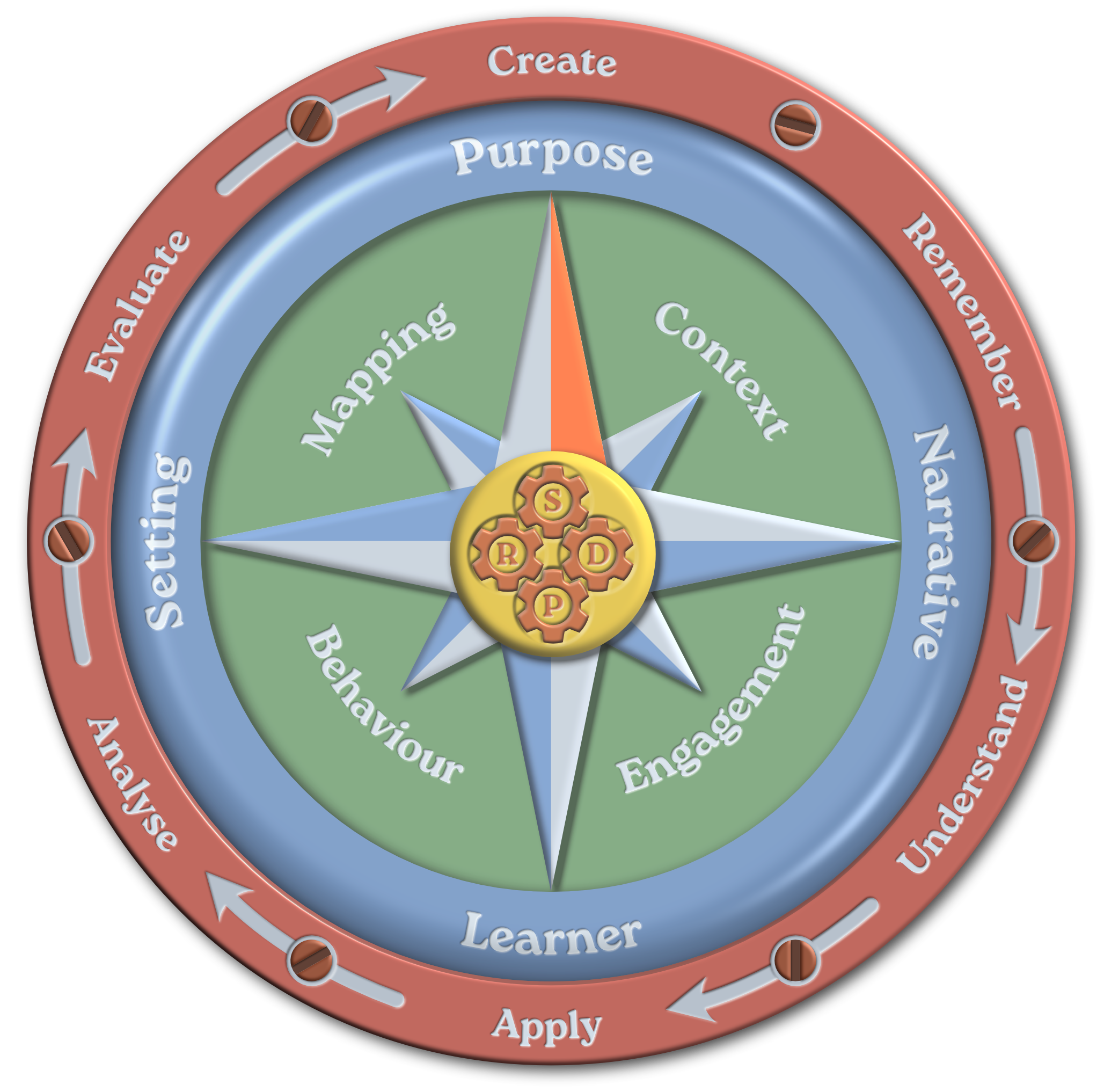
The Learning Design Compass
Common Scenarios
Not sure where to start? Find yourself in one of these situations and we'll point you in the right direction.
"I'm not sure my teaching is having any impact"
This is one of the hardest feelings in education — putting in the work and not knowing if it's landing. The good news is there are practical ways to design for impact and make it visible.
Guides
- Learning Design Compass — Understand the framework that connects planning, designing, teaching, and assessing into a coherent whole
- Lessons from Advertising for Educators — Learn techniques for making your message land with your audience
Tools
- Assessment Designer Tool — Redesign your assessments so they reveal genuine learning, not just compliance
- Learning Cycle Tool — Build a teaching cycle that creates natural feedback loops so you can see what's working
"I need to design or redesign my module from scratch"
Starting from a blank page (or a module that needs a complete rethink) is daunting but also an opportunity. These tools will help you build something coherent and balanced.
Guides
- Learning Design Compass — The framework that underpins this entire toolkit
Tools
- Course Designer Tool — Build a holistic map of your course and export it as a plan
- Learning Design Agent — An AI agent who works with you collaboratively to design your course
- Workload Calculator — Check whether what you're asking of students is actually realistic
- Module Planner — Plan your module week-by-week and ensure balance
"I'm worried I'm not balancing theory and practice"
Getting the balance right between what students need to know and what they need to be able to do is one of the core challenges of learning design. These resources help you see and adjust that balance.
Guides
- Learning Design Compass — Understand how the four dimensions of learning design connect and balance each other
Tools
- Course Designer Tool — Visualise the balance across your module and spot where theory or practice dominates
- Learning Cycle Tool — Design teaching sessions that weave theory and practice together naturally
"Group work always falls apart"
It's not you — most group work fails because it's assigned rather than designed. The problem is structural, and the fix is structural too.
Guides
- Designing Group Work — A complete guide to designing group work that mirrors how real teams actually function
Tools
- Assessment Designer Tool — Design group assessments with built-in individual accountability
"Students only seem to care about the grade, not the learning"
If students are grade-focused, it's usually because the system has trained them to be. You can shift this by redesigning what you reward and how you communicate the purpose of the work.
Guides
- Lessons from Advertising for Educators — Learn how to sell the value of learning itself, not just the qualification
- Learning Design Compass — Understand how assessment, teaching, and design connect to create intrinsic motivation
Tools
- Assessment Designer Tool — Rethink your assessment so it rewards the learning behaviours you actually want to see
- Learning Cycle Tool — Design sessions where the learning process itself becomes engaging and visible
"I can't tell if students wrote their assignments or AI did"
This is the question everyone's asking. The answer isn't detection — it's redesign. These resources help you understand AI, assess its risk to your work, and build transparency into the process.
Guides
- AI Fluency Assessment Guide — Learn how to incorporate AI into your assessment strategy
- AI Fluency Teaching Guide — Understand AI well enough to teach students how to use it responsibly
Tools
- AI Risk Tool — Evaluate the risk AI poses to your specific assessment and get redesign suggestions
- AI Fluency Assessment Design Tool — Create a plan for integrating AI into your assessment
- AI Diligence Statement Builder — Give students a structured way to be transparent about their AI use
Training
- AI Fluency Training — Learn the AI Fluency Framework from Anthropic
- AI Fluency for Educators — Approach AI fluency from an educator's perspective
- AI Fluency for Students — Share with your students so they build their own AI literacy
"I want to try something different but I'm worried it'll go wrong"
Innovation in education feels risky because institutions tend to resist change. But there are evidence-based ways to introduce new ideas that grow rather than get shut down.
Guides
- Designing for Cultural Change — Evidence-based strategies for making change happen in resistant institutions
- Learning Design Compass — Ground your innovation in a solid framework so it's less likely to wobble
Tools
- Course Designer Tool — Map out your new approach so you can see the whole picture before committing
- Learning Design Agent — Talk through your ideas with an AI collaborator who knows learning design
Are you still struggling?
Sometimes you just need to talk it through with someone. If none of the scenarios above quite fit, or you've tried the tools and still feel stuck, get in touch. I'm happy to help.
Drop me an email at davidcalummillar@gmail.com or connect with me on LinkedIn and tell me what you're working on. The more complicated (or strange) the problem the better!