Lessons from Advertising for Educators
Teaching is, at its core, a communication challenge. You have something valuable (knowledge, skills, ways of thinking) that you need your audience (students) to engage with, understand, and act upon.
If Nothing Else, Take Dave Trott's Advice
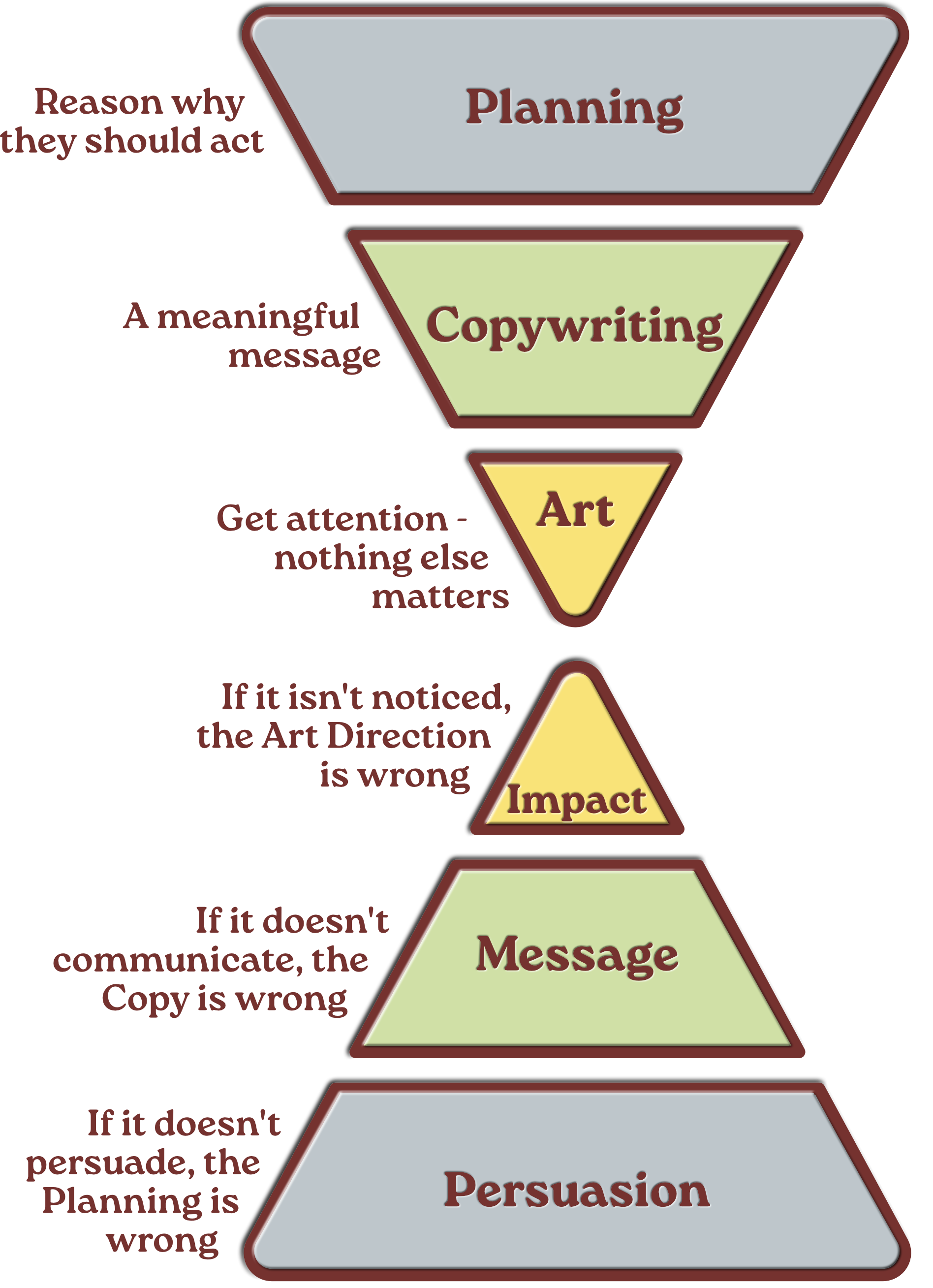
The advertising industry has spent decades solving a problem that educators face every day: how do you get someone's attention, make them care, and move them to action? Dave Trott, one of advertising's most respected creative thinkers, distils it into three essential elements:
1) Impact: Hook Them In
Get attention. Figure out where your audience is most receptive and do whatever it takes to stand out. If you don't stand out or you try to copy what everyone else does then you don't have impact. Your copy should be succinct, memorable, and challenging. Your art direction should be bold to get attention and it should be in contrast to the environment it's in.
2) Message: Make It Meaningful
Resonate. Your message has to be something your audience cares about, that is deeply relatable to their daily lives. Your message also needs to be delivered at a time and place they are most receptive to it.
3) Persuasion: Give Them a Reason to Act
Why should they? What do they get out of it? Try to make it a frictionless choice. Good advertising illustrates the audience not the seller. Good advertising sounds like the voice in your head.
This presentation from Dave Trott covers the basics!
Step 1: Planning (Persuasion) – Keep It Simple
This section essentially expands, or gives another way of looking at, the Purpose section in the Learning Design Compass Guide to help really focus on what it is you're trying to achieve.
Get into the habit of watching how people behave. Look at associated things they interact with and consider how that shapes their view of the world. Speak to people, all the time, everywhere, and understand what they do and why they do it. What drives them?
Do Your Own Research
Something to note: Behaviour is cultural. Emotions are universal. It's difficult to appeal to every culture in the world. It's easier to appeal to the emotions we all feel.
Marketing people and academics love pointing at data. Data is safe. When targets aren't met, they can point to the data and say "well the data indicated it would work". Data, by its very nature, is in the past. When designing for people, your job isn't to look for trends in data, but to look at the vacuums it leaves behind. Not to look at where people are, but where they will be.
Your job when designing isn't to concern yourself with the measurement of things, it's to understand the nature of people.
Your student isn't a segment, they are a person. Just like you. Figure out what actually makes a difference to the student.
The first thing you have to do is go and speak to the people that make the product or service – in education, that means speaking to practitioners, industry professionals, and graduates. Ask them what it is they think is special about it. What they made or How it works, isn't as important as Why they made it and Why it's important. You're searching for a thread to pull that will resonate with your intended audience.
Reframe the Problem
When designing in teams, ideation should be done solo and then presented to the group for further development. This prevents a dominant voice or idea from taking hold early. It also allows for more abstract ideas to be considered rather than the 'safe' obvious solution.
The 5 Whys

Be that annoying child in the backseat of the car to get to the core of the problem. Keep asking "why?" until you reach the fundamental issue. In teaching, this means digging past surface-level symptoms ("students aren't engaged") to root causes.
The Analogy Tool
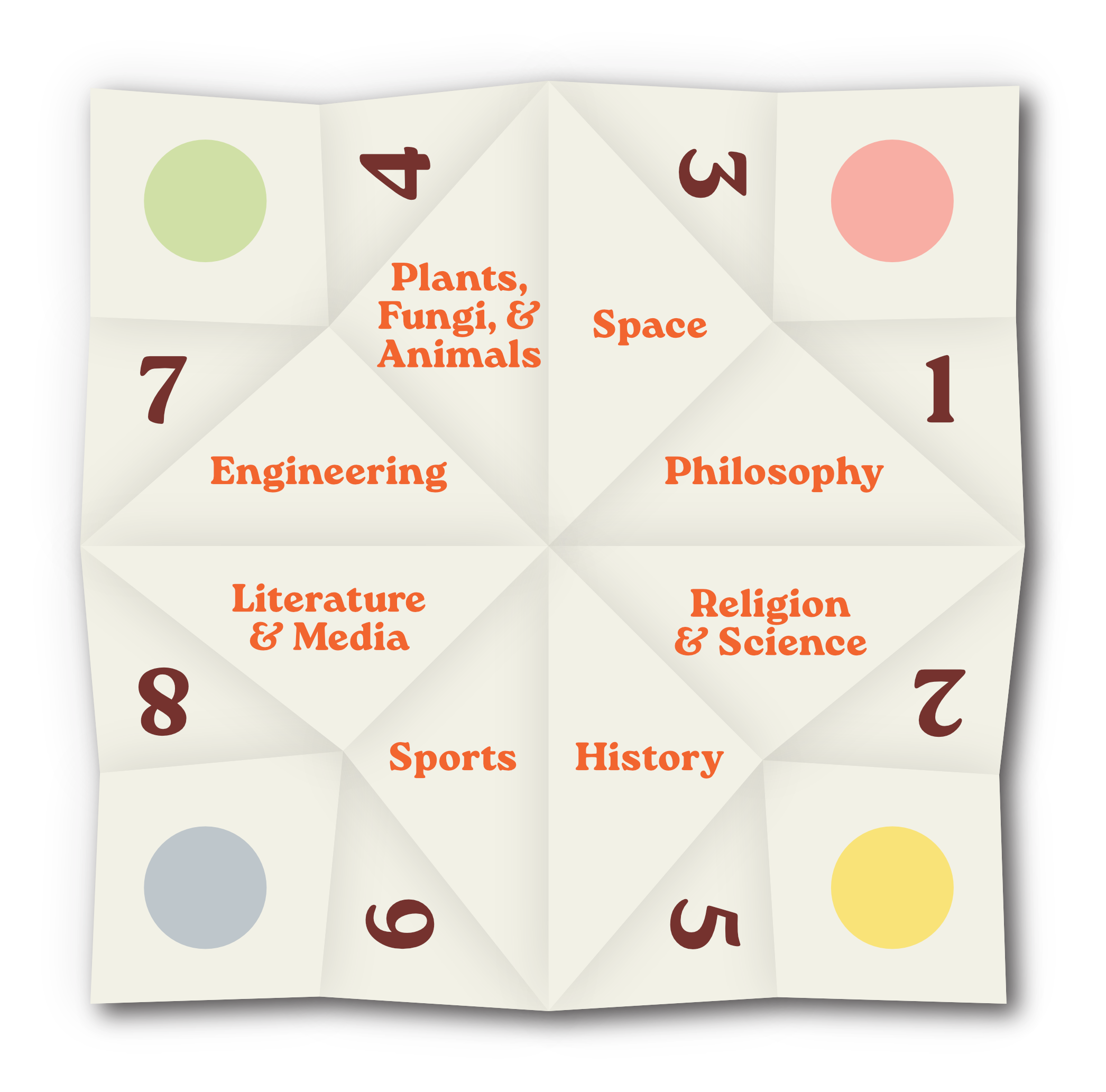
Find inspiration from areas outside of the one you're solving for. For example, if you were trying to find better strategies for communication, you might look at how fungi or bees network. Or if you want to explain a complex topic, maybe relating it to a sporting analogy that people are familiar with can help give it meaning.
SCAMPER
Consider the problem by seeing it in different contexts and applications using the SCAMPER method by Bob Eberle:
- Substitute: Replace a part or component with something else.
- Combine: Merge two or more elements together to create something new.
- Adapt: Adjust an existing idea to fit a new purpose or context.
- Modify: Make changes to the design or function.
- Put to another use: Find new applications for an existing approach.
- Eliminate: Remove a component or feature that is unnecessary or causing problems.
- Reverse: Change the order or direction of a process or activity.
Change & Persuasion
How can you change behaviour?
Aristotle's Appeals
384–322 BC – Aristotle illustrated a series of appeals when it comes to making persuasive arguments that still stand to this day and are well worth considering when constructing a message that both informs and persuades:
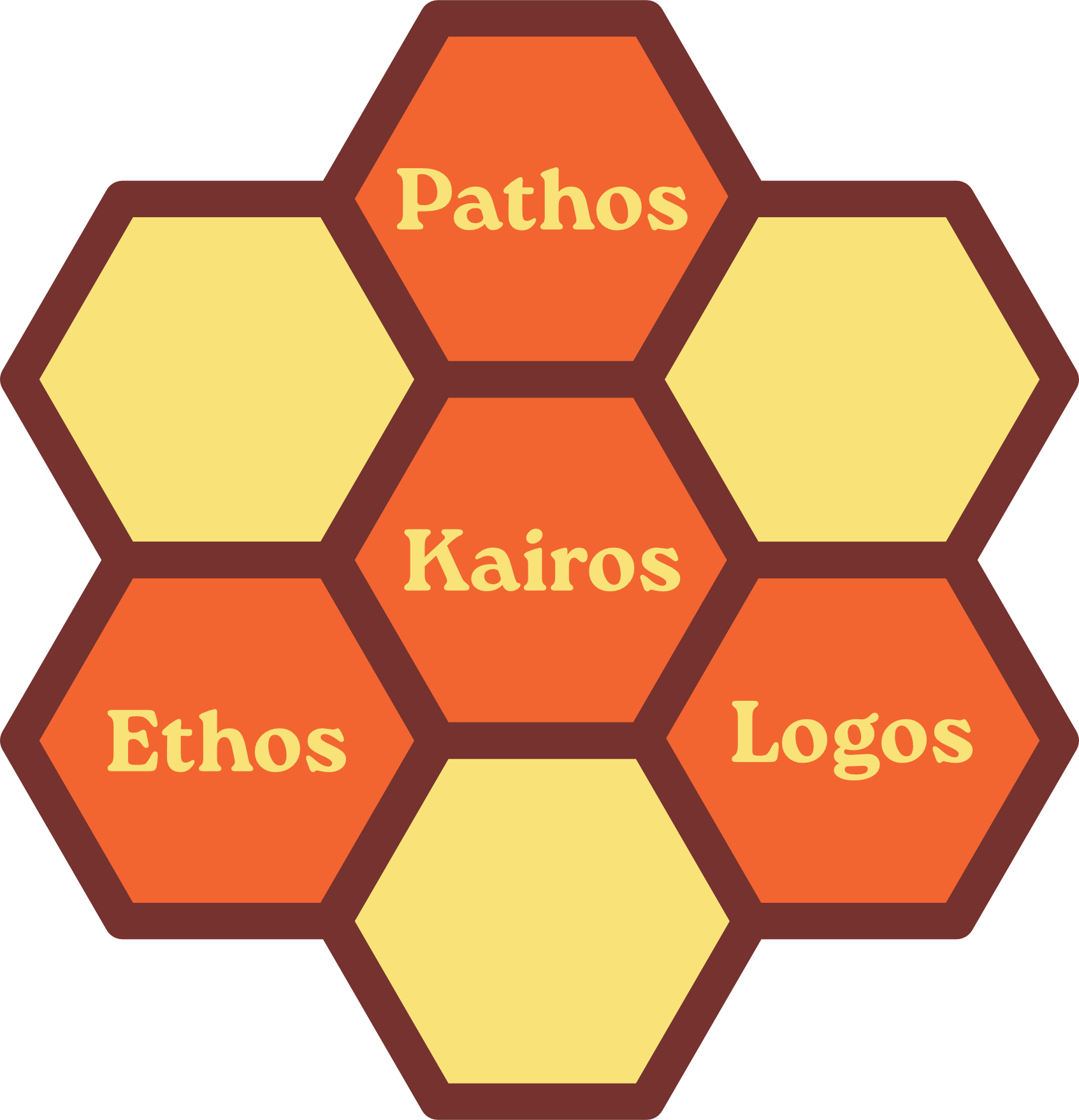
Logos
Is your message logical and practical?
Ethos
Is your message ethical?
Pathos
Does your message appeal to emotion?
Kairos*
When and where is the audience most receptive to the message?
*This is the most important and overlooked of Aristotle's Appeals
EAST & MINDSPACE Frameworks

The EAST and MINDSPACE frameworks are excellent for considering your student's behaviours and how to engage them. Damon Centola has also conducted excellent research looking at how to plant seeds and create change with his book Change: How to make big things happen.
Write the Brief
Modified T-Plan by JWT Agency, adapted for education:
- What is the opportunity or problem that must be addressed?
- Who are you solving for? – Who is your intended audience?
- What is the key result you want? – What does success look like (learning outcomes)?
- What information or attributes might help produce this result?
- What needs to be communicated or reinforced? – What do you need to convince them of?
- Are there any restrictions or considerations? – budget, timeframe, etc.
- This could be helpful... – any object, analogy, etc. to help illustrate the nature of the brief.
Step 2: Your Message – What's the Big Idea?
Remember to speak to the people on the ground who practically engage with your topic or concept and ask them why it's special.
Remember to Keep it Simple
1) Impact: Hook Them In
Get attention. Figure out where your audience is most receptive and do whatever it takes to stand out. If you don't stand out or you try to copy what everyone else does then you don't have impact. Your copy should be succinct, memorable, and challenging.
2) Message: Make It Meaningful
Resonate. Your message has to be something your audience cares about, that is deeply relatable to their daily lives. Your message also needs to be delivered at a time and place they are most receptive to it.
3) Persuasion: Give Them a Reason to Act
Why should they? What do they get out of it? Try to make it a frictionless choice.
Copywriting 101 – 4 Steps to Keep in Mind
- Research the topic/concept (how it works, why it was made)
- Think about the individual you are talking to and picture them as you write.
- Make sure your voice comes from the client and speaks to the consumer.
- Write your copy like you're writing a letter to a close friend. Tell them about the topic/concept; then chop off the "Dear..." and "best wishes" before delivery.
Simple Timeless Human Truths
Now you've got to take your Big Idea and make an impact at an individual level. Make it human – how does it impact an individual? What do they care about? What's going on in their head at that moment? You're not talking to a mass audience or trying to shout to get the attention of the crowd. You have to engage your audience like you're a voice inside their head.
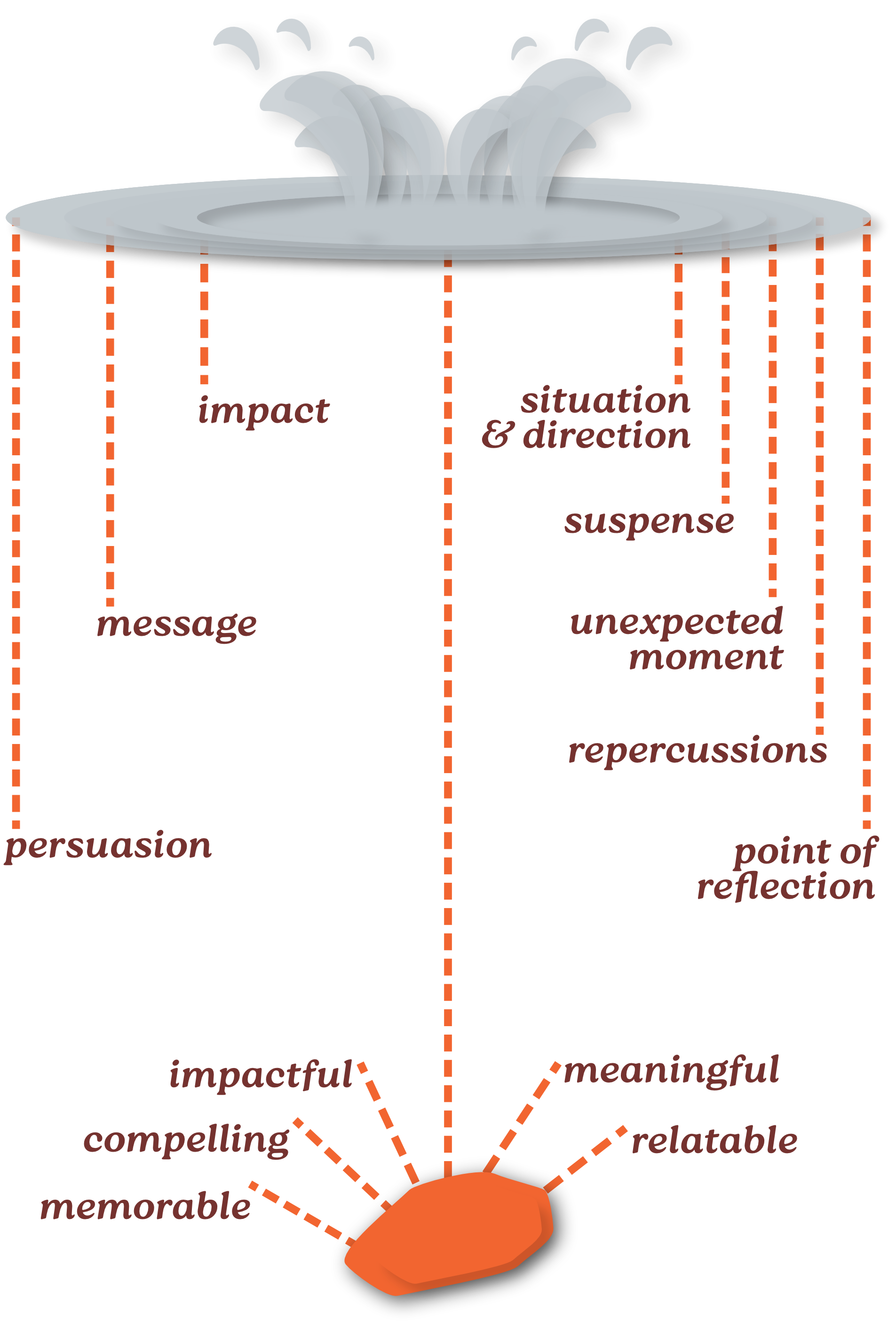
Think of it like a stone hitting water: the impact of the stone has to be meaningful and relatable. The ripples it produces are the narrative. Impact – Message – Persuasion. Or narratively: Situation, Suspense, an Unexpected Moment, Repercussions, then a Point of Reflection.
The trick is carrying your audience on that journey that keeps them engaged.
Ira Glass gives a great talk on creating engaging narratives
Stand at a Slight Angle to the Universe
Try to develop logic that engages creativity by doing activities like Cryptic Crosswords and writing Haikus (observation using a 5-7-5 syllable structure). Read books, listen to podcasts/radio, and watch television, particularly from surrealist thinkers like Flann O'Brien, Monty Python, and The Goon Show, to help you reframe the world around you into something interesting and impactful.
What's the Big Idea?
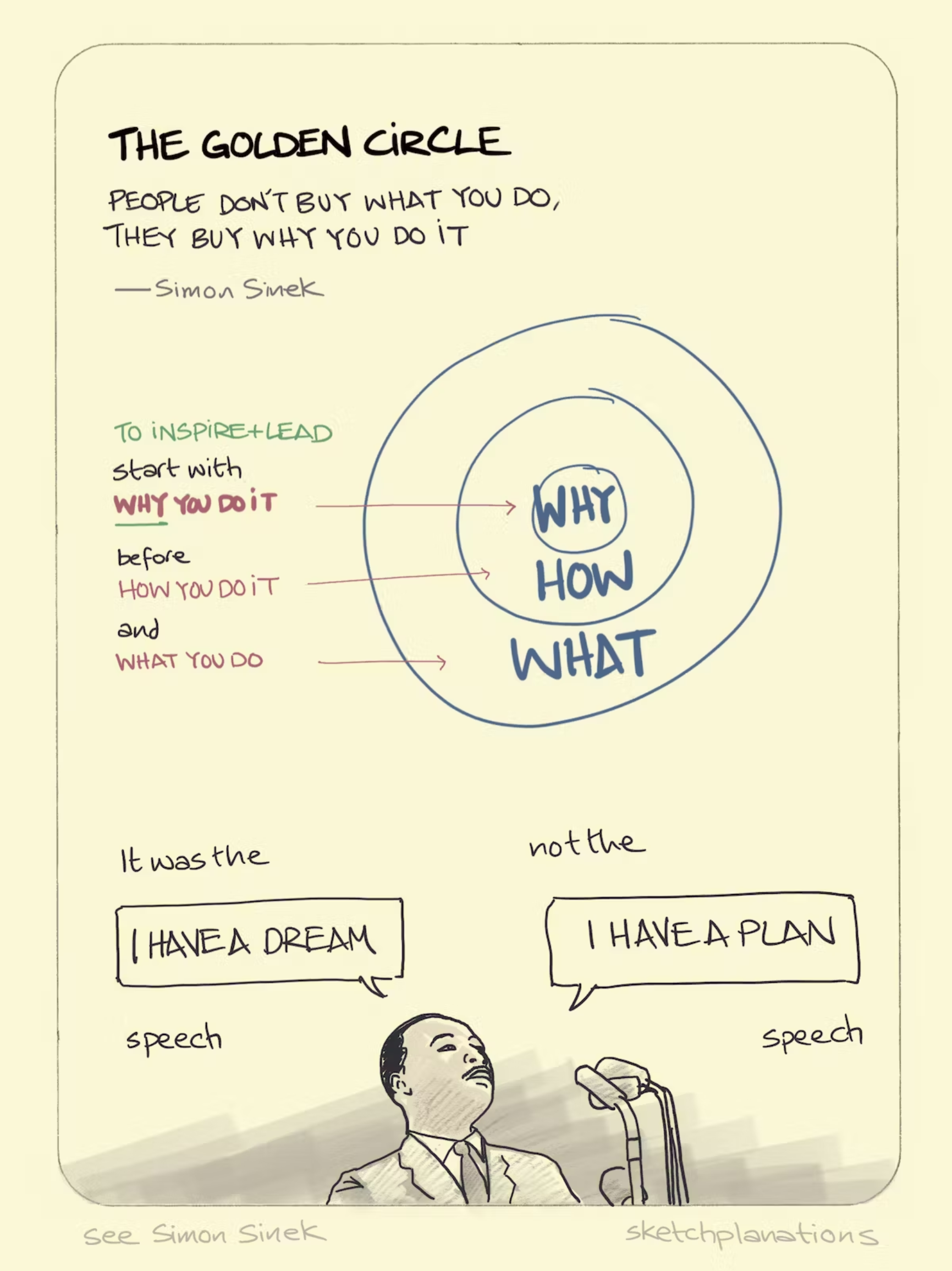
Keep it simple and get down to why it's important and relevant. Be honest though. It's not What it is or necessarily How it works, it's Why it's important that matters.
Value is just someone's perception of something. Storytelling can influence that. If you want to see a good example of how a story can increase the value of something, have a look at the Significant Objects project.
Step 3: Get Attention – Art Direction
You've got the words, now how are you going to give them impact?
You have one task when it comes to art direction: Stand Out. Nothing else matters.
You need to look for a way to either exploit your competition or exploit a situation to your advantage to get your message in front of your intended audience. That takes creativity and lateral thinking.
Do not do what everyone else does.
It's not about screaming for attention, it's about being in contrast to the surrounding environment. Look at a magazine stand and you'll see bright colours, bold fonts, and as many attention-grabbing headlines as they can pack in. The problem is, every other magazine is doing the same thing. If you put a magazine in there that's shot black & white and has a single minimal recognisable image, then it will stand out by a mile.
"Great advertising should be a punch in the mouth" – George Lois
Damn good advice from George Lois
Mediums
Choosing Your Medium
Remember: The Medium serves the Story, the Story does not serve the Medium.
Your choice of mediums is overwhelming, so start with designing around when, where, and how your audience will be most receptive to it and then choose the most appropriate form.
Remember you're still following what Dave Trott says in anything you create: Impact > Message > Persuasion.
Posters & Graphic Design
Your job is to stand out so think about when and where your posters or graphics are going to be seen. Is it at a bus stop? Is it in a magazine? Is it a business card or a beer mat? What environment is it in? If it's a busy environment then a simple visual might stand out more. If they're waiting around in a grey concrete environment then make it colourful and more intricate so they are encouraged to explore.
Most importantly: what is likely on someone's mind at that moment in that environment?
Video & Audio Storytelling
Show, don't Tell.
There's a range of narrative techniques you can borrow from cinema to help your audience fill in the gaps and create their own meaningful messages:
Presenting Character & Environment
Transitions
Realistic Dialogue
Sound Design
Composition
How to use Colour
Interactive & Virtual Experiences
The internet changed everything and now emerging technologies like AI and virtual/augmented reality mean that now your audience can be even more engaged as curators and creators. They're the creative directors and can use their imagination to tell stories and experiences within the worlds you create for them.
Taking over physical spaces or developing geographic-based activities can be a good way of shepherding people towards a point of engagement or building community. And of course don't forget about traditional tabletop games - remember the medium serves the story.
Step 4: Your Presentation
Make Your Case
Checklist – Make Sure You've Got This Right
Before you pitch, you need to get real about what you have created and if any part of it isn't working you need to know where and why and redesign as necessary.
- Does it persuade? If not, the planning is wrong.
- Does it communicate the message effectively? If not, the copy is wrong.
- Does it have impact and get attention? If not, the art direction is wrong.
How to Write a Pitch
Making your pitch to the client is essentially the same as selling your idea to an audience. Again and again and again it's: Impact – Message – Persuasion.
Take your audience on a journey – this is not that different from the classic 5 act dramatic structure. Keep it succinct and impactful.
- Situation – A big undeniable change that creates stakes. If there's no action then what will happen?
- Obstacle – Name the point of friction. What's causing the problem?
- The Alternative – Tease the idea of a better reality. What would an ideal world look like?
- Function – Explain the mechanism for how it would work. How would that ideal world work in reality?
- Form – Demonstrate your solution. Reveal your solution that shows it exists and make the persuasive argument an obvious choice.
Adapted from "A Short Guide to Advertising" © 2025 David Millar, licensed under CC BY-NC-ND 4.0.