The Learning Design Compass
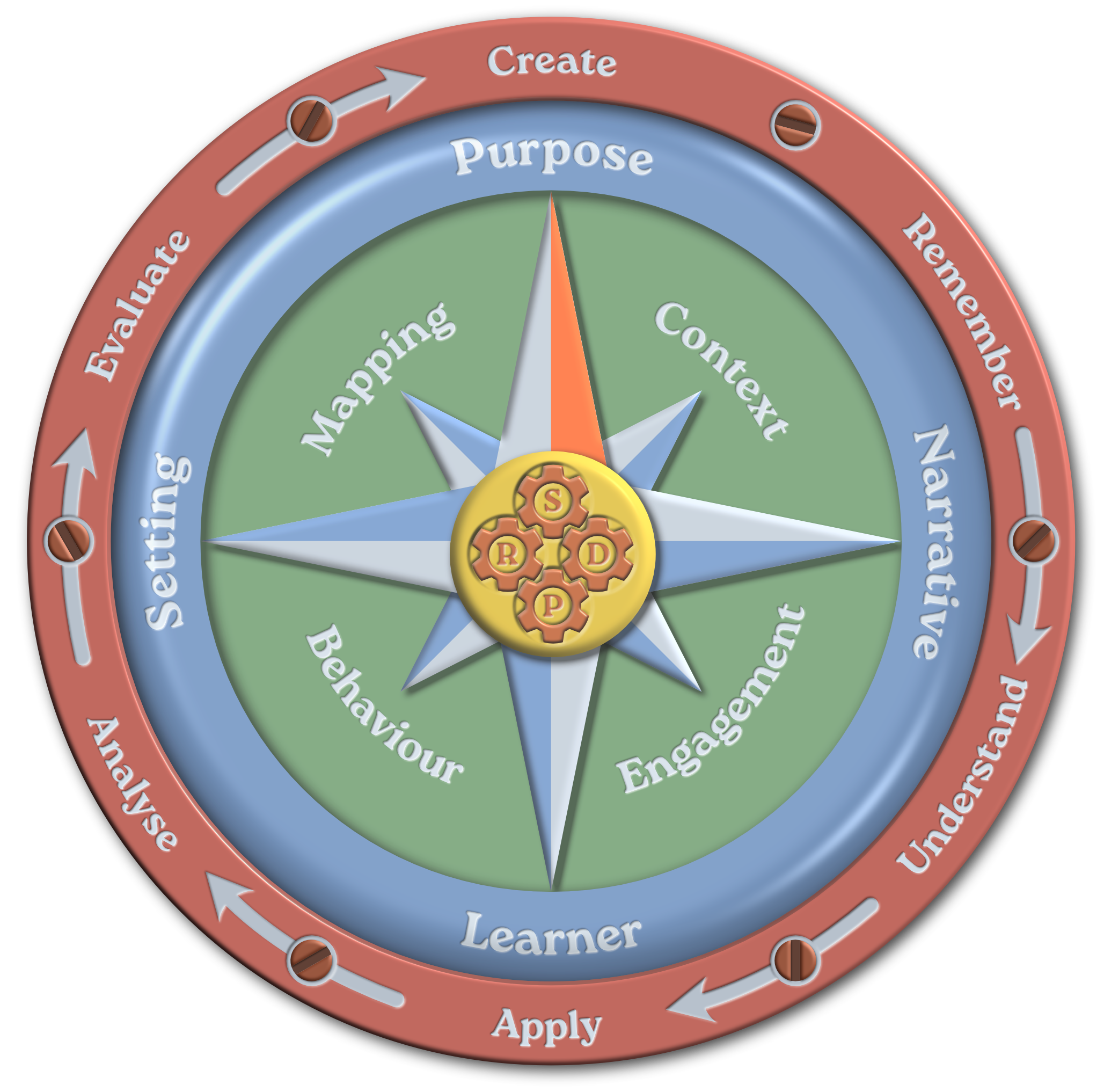
The Learning Design Compass is a framework for designing courses that create genuine transformation in students. It guides you through eight interconnected design elements, a teaching cycle, and assessment design, moving from purpose through to evaluation.
The guide is structured in three phases:
- Design (Steps 1-8): Before you can build anything meaningful, you need to know why this course exists, who you're teaching, and how to create an immersive learning environment.
- Learning Cycle: When we strip it back to its basic form, education is simply Story (Theory) and Play (Applied Theory).
- Assessment Design: You've designed the course and developed the learning cycle. Now you need to evaluate whether students have actually learned what you're teaching.
Step 1: Purpose
You're laying the foundation. Before you can build anything meaningful, you need to know why this course exists. Not the official learning outcomes from your handbook, but the actual transformation you're creating.

What should students be able to do by the end of this course that they couldn't do before?
Be specific and concrete. "Understand X" is not good enough. Understanding is invisible. What can they create, analyse, evaluate, or apply? What actions can they take?
If students forgot 90% of this course within a year, what's the one thing you'd want them to retain?
This is your core. Everything else orbits around this.
Why does this course exist?
Ask yourself "why" at least three times to get past the surface answer.
Why? → Why does that matter? → Why does THAT matter? → Why is that important? → The core purpose (bedrock)
What transformation are you creating in your students?
They start as someone who [blank]. They end as someone who [blank].
Step 2: Learner
Now you need to understand who you're actually teaching, not to stereotype them, but to recognise that learning happens in diverse ways for diverse people in diverse contexts.
Who are your students really?
Think about your actual cohort. Consider: What year/level are they? What else are they studying? What brought them to this subject?
When in a student's daily life might natural learning opportunities occur that relate to the topic you're teaching?
For example: If you're teaching statistics, they might encounter data in news articles, social media, sports results. If you're teaching history, they might see echoes in current events or family stories.
How do you think your students will receive and understand this topic?
What might they find difficult? What might they find exciting? What misconceptions might they bring? What prior knowledge can you build on?
What does success in this module look like for your students?
Not just "they pass". What does it mean for them to genuinely succeed? What will they be able to do, think, or create?
Step 3: Setting
Learning doesn't happen in a vacuum. The best courses create worlds, immersive environments where theory and practice naturally connect, where students can explore, experiment, and encounter ideas in contexts that feel real.
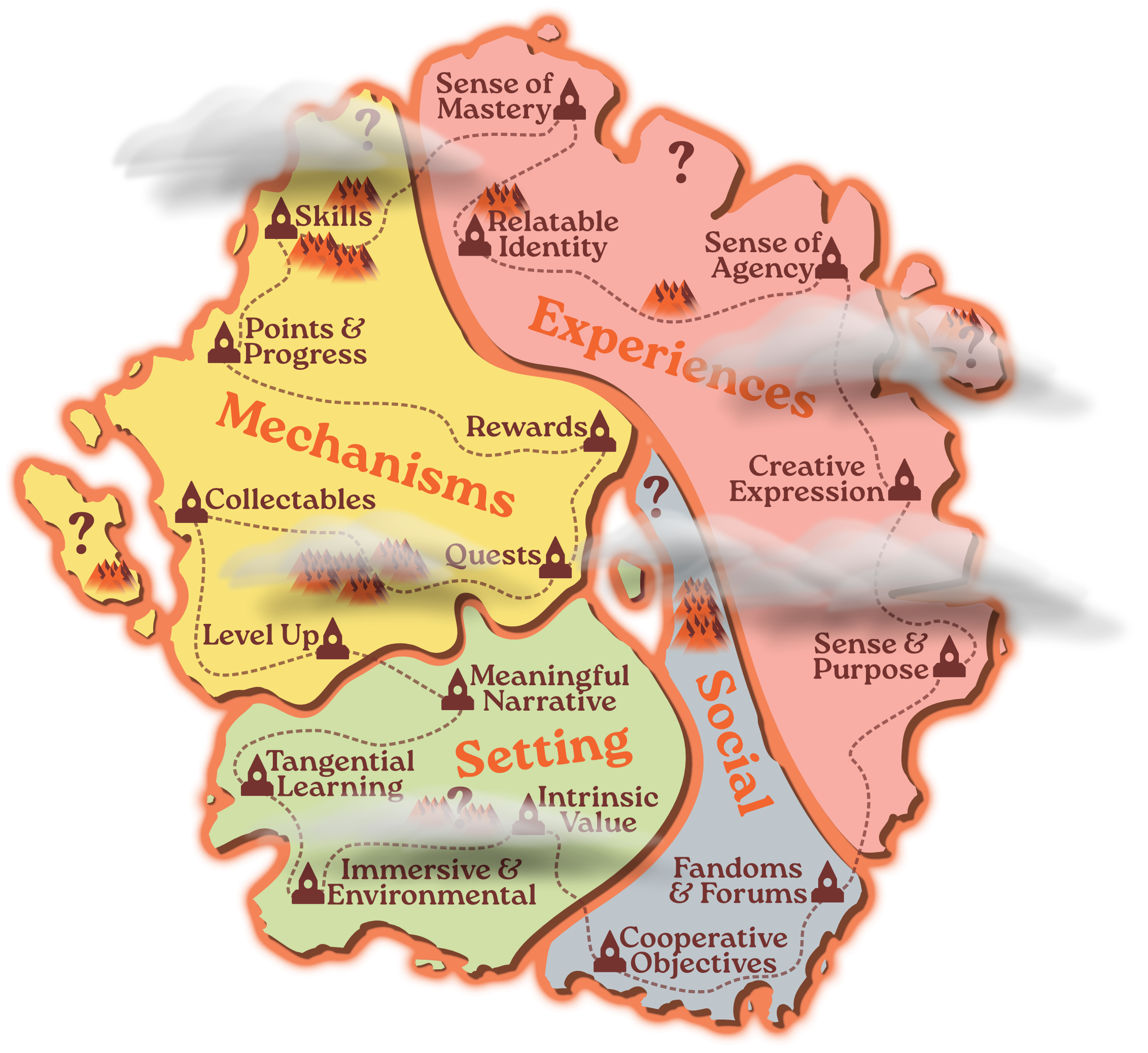
If you could design the perfect learning environment for this course, what would it look like?
Don't limit yourself to what's currently available. What would genuinely serve the learning? Think big.
Where will students actually use what you're teaching them?
Not "in the exam", in the real world. In their future work. In their lives.
How can you create an immersive world for your students?
A space (physical, virtual, or conceptual) where they can practise what you're teaching.
Examples: A simulated workplace environment, a case study they inhabit across the semester, a real-world problem they're solving, a creative project that unfolds over time, a community they engage with, an online simulation or game world.
Where does learning happen in your course?
Think about all the different contexts, not just the formal teaching spaces. On campus, at home, out in the world.
How can you bridge the gap between classroom theory and real-world practice?
What would help students see the connection between what they learn in your course and where they'll actually use it?
Step 4: Narrative
Every course tells a story across the semester. When you design with narrative structure, students don't just accumulate information, they experience a journey with moments of tension, discovery, and transformation.
The following five-act structure works at two scales: it can shape your entire course from semester start to end, and it can structure individual lectures or workshops. It's scalable. Use it for the big picture and the small moments.
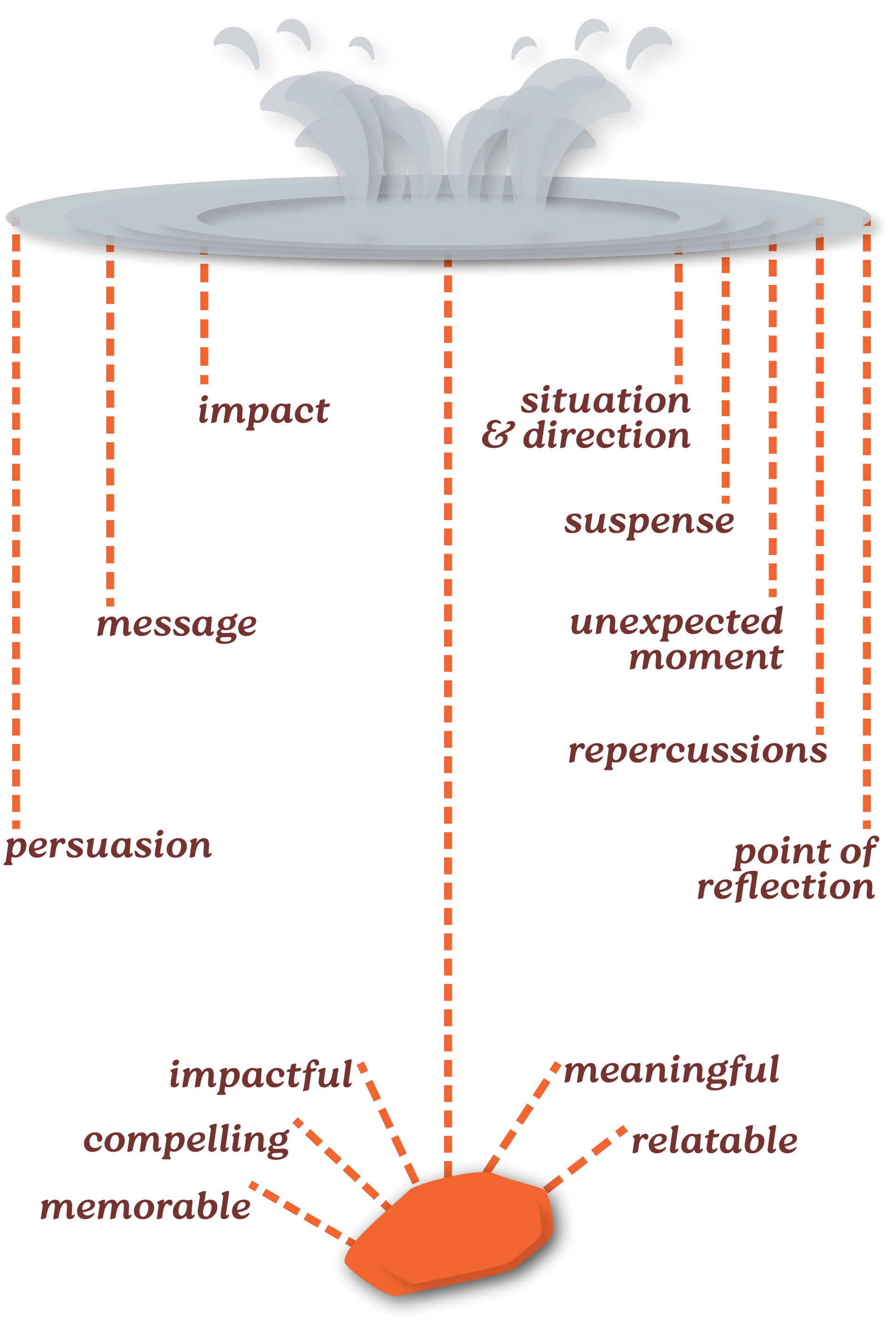
Where do your students begin?
What's the starting situation? What do they know? What don't they know? What questions or problems frame the start of this journey?
How do you build interest and suspense?
What hooks their attention? What creates momentum? What makes them want to keep going?
Think about: Provocative questions, intriguing case studies, puzzles to solve, challenges to overcome.
What's the unexpected moment that illuminates, contradicts, or shifts their understanding?
Every good story has a turning point. What's yours? This might be: A case study that challenges assumptions, a concept that reframes everything, a practical experience that reveals complexity, an "aha moment" where things click.
What are the repercussions? How do students work through this new understanding?
After the turning point, what do they do with it? How do they apply it, test it, practise with it?
Where's the point of reflection?
How do students look back on the journey and make sense of what they've learned? This might be: A final project that synthesises learning, a reflective assignment, a presentation where they teach others, a portfolio showing growth.
Step 5: Context
Bridges Purpose ↔ Narrative
Context is about how you articulate your ideas. What frameworks, analogies, or mental models help students grasp complex concepts? How do you make the abstract concrete?
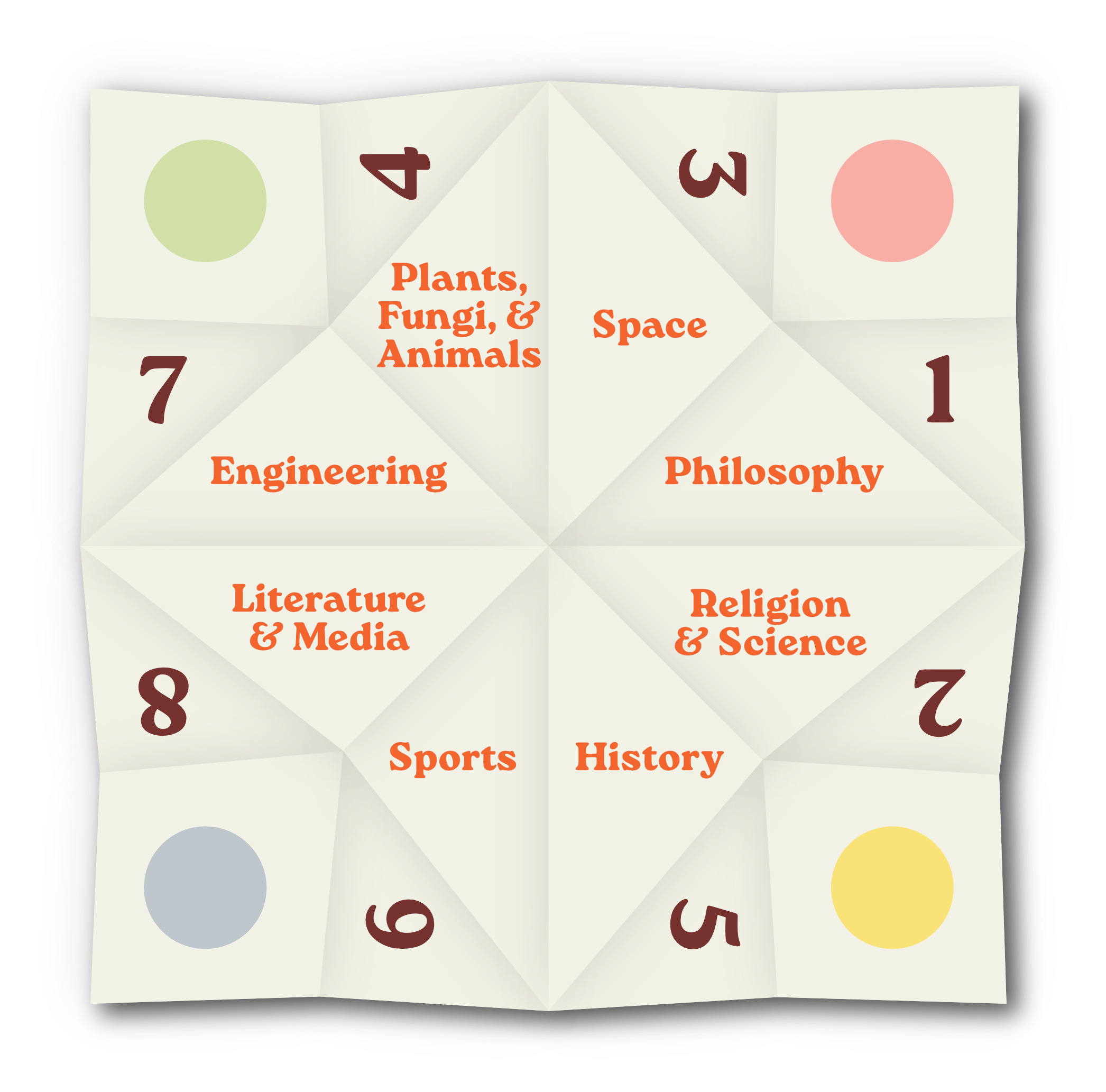
What frameworks or mental models help students understand your core concepts?
Think about: Diagrams, models, systems, processes. What gives students a way to organise and make sense of information?
What analogies or metaphors make your subject matter accessible?
For example: The heart is like a pump. Code is like a recipe. History repeats like patterns. What comparisons help bridge the gap between unfamiliar concepts and familiar experience?
How do you scaffold understanding across the semester?
How do concepts build on each other? What needs to be understood first before moving to more complex ideas?
What examples from everyday life, popular culture, current events, or other disciplines help illuminate your topic?
The best learning happens when students see connections everywhere. What helps them recognise your subject in the world around them?
Step 6: Engage
Bridges Narrative ↔ Learner
Engagement isn't about entertainment, it's about creating genuine investment. How do you hook attention, maintain momentum, and make students care about what they're learning?
What makes your subject matter compelling?
Why should students care? What's at stake? What problems does this solve? What questions does it answer?
How do you hook students' attention at the start?
First impressions matter. What grabs them on Day 1? What makes them think "this might actually be interesting"?
How do you maintain momentum when energy naturally dips (usually around Week 6-8)?
What keeps them going when the initial novelty wears off and assessment pressure hasn't kicked in yet?
How do different types of learners engage with your material?
Students absorb information differently. How can you build in multiple entry points so everyone can engage?
Think about: Learners who need to see concepts (diagrams, images, demonstrations), learners who need to discuss and explain (dialogue, debate, teaching others), learners who need to do and practise (hands-on, physical, applied).
What makes this learning relevant to your students' lives, careers, or concerns?
Students engage when they see the connection between what you're teaching and what matters to them. How do you make that visible?
Step 7: Behaviour
Bridges Learner ↔ Setting
This is about understanding how students actually act in learning contexts and designing with that reality rather than fighting against it. How do you create conditions where productive learning behaviour naturally emerges?
What behaviours do you want to encourage in students?
For example: Curiosity, experimentation, questioning, collaboration, independent thinking, persistence, reflection.
What currently supports those behaviours? What currently hinders them?
It's worth drawing out two columns and titling one 'Supports' and the other 'Hinders' and then drawing relationships between the two to identify opportunities where one element may help enhance or overcome the other.
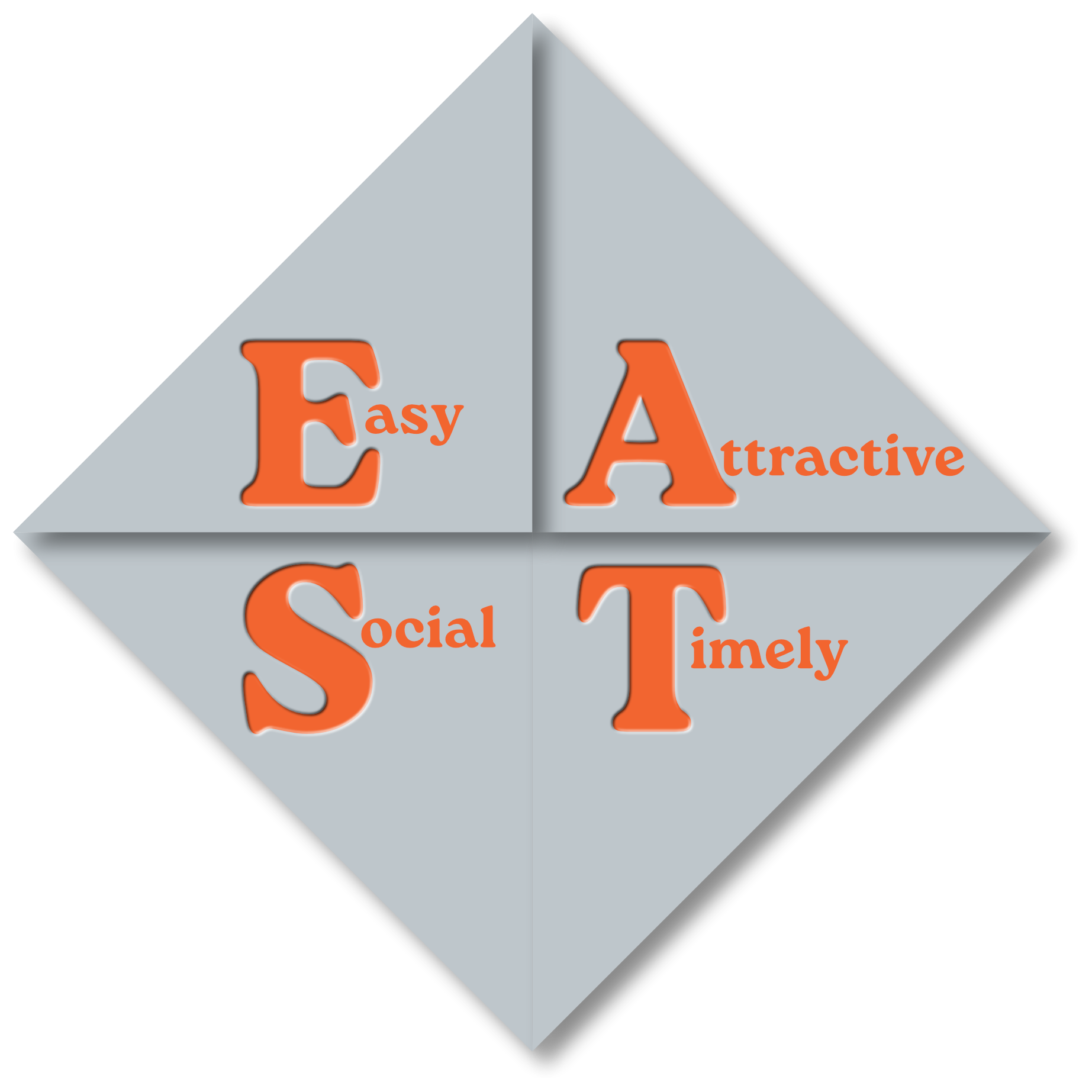
How can you make desired behaviours easy, attractive, social, and timely?
The EAST Framework (developed by the Behavioural Insights Team) suggests four principles:
Easy: Remove friction. Make it simple to do the right thing.
Attractive: Make it appealing. Show the benefit.
Social: Create opportunities for students to discuss, collaborate, or work together.
Timely: Deliver it when and where students are most receptive.
Where might students naturally practise the skills or knowledge you're teaching outside of formal class time?
Can you design opportunities for them to encounter your subject in their daily lives? To notice it, practise it, apply it informally?
How can you design for actual student behaviour rather than ideal student behaviour?
Students are busy, distracted, anxious, juggling multiple demands. They don't always do the reading. They leave things to the last minute. They look for shortcuts. How do you work with that reality?
Some approaches that work with reality:
- Bite-sized videos (5-10 minutes) instead of hour-long lectures
- Asynchronous activities they can do on the bus or in spare moments
- Low-stakes 5-minute practical tasks that punctuate lectures
- Mapping and signposting: clear, immediate relevance to things they care about
- Building reading/prep into class time rather than assuming it happens beforehand
Step 8: Mapping
Bridges Setting ↔ Purpose
Mapping is about how students create meaning from their experiences, how they connect what they're learning to their own lives, goals, and understanding of the world. This is where learning becomes personal and memorable.
How do students map their experience of your course to the core purpose?
What helps them see the connection between the activities they're doing and the transformation you're creating?
What creates memorable, transformative experiences for students?
What moments stick? What do they remember years later? These are usually experiences that engage emotion, challenge assumptions, or create genuine discovery.
How much structure vs. agency do students have in shaping their own learning journey?
Too much structure and they're just following instructions. Too much freedom and they're lost. Where's the balance? Where can they make meaningful choices about what to explore, how to demonstrate learning, or which direction to take?
What sensory or emotional experiences reinforce your teaching?
Learning isn't purely cognitive. What do students see, hear, touch, feel, create that makes concepts tangible? What moments surprise them, challenge them, delight them?
How do students connect what they're learning to their own sense of purpose or identity?
The most powerful learning happens when students can answer "What does this mean for me? How does this fit into who I am or who I'm becoming?"
The Learning Cycle
There's a world of pedagogical frameworks and overcomplicated discussions on effective modes of delivery that get people bogged down. When we strip it back to its basic form, education is simply Story (Theory) and Play (Applied Theory). You hear a Story, you Discuss the story to understand it, you Play to evaluate those concepts, you Reflect on that experience, then you summarise with a Story, and round and round it goes. Nothing more complex than that really.
You can enter this cycle at any point, starting with a story, a discussion, a practical activity, or a reflection. Once you're in the cycle, it keeps turning.
This stage of the framework is also a Universal Design tool: each stage carries friction-point guidance so that the cycle works for a genuine diversity of students, without treating accessibility as a bolt-on. Friction points faced by neurodivergent learners are framed here as universal human challenges, with concrete craft insights at each stage.
Want to work through these prompts for your own course? Use the Learning Design Compass Tool to capture your answers and export them as PDF or Word.
Story (Theory)
Nobody remembers a PowerPoint. They remember the moment their lecturer said "right, forget everything I just said, let me tell you what actually happened" and then told them something true and slightly unexpected. That's a story. It just needs a shape. Something changes. Someone or something is different at the end than they were at the beginning.
A lecture is a story. A reading is a story. A case study, a short video, a worked example, all stories in different clothes. The question isn't whether you're telling one. It's whether your students can find their way into it.
What story are you telling? What concepts, ideas, or information are you introducing, and how are you presenting them?
Getting students in the door
Many students arrive at a new topic without knowing why it matters to them yet. This isn't disengagement, it's orientation. They're standing outside the story looking for a way in.
The most reliable entrance is relevance: a moment early on where the student thinks this connects to something I already know, or something I already care about. It doesn't need to be elaborate. A single question, an unexpected example, a real-world scenario that makes the abstract suddenly concrete. Think about your students' daily lives, their prior experience, the world they already inhabit. Where does your subject already appear there, even if they haven't noticed it yet? That's your way in.
Is there a moment at the start of your story where students can recognise something familiar? What connection could you make between your subject and something already in their world?
How much to carry at once
When we know a subject deeply, it's genuinely difficult to remember what it felt like not to know it. This is sometimes called the curse of knowledge, and it means experts naturally tend to introduce more at once than a newcomer can hold.
Working memory, the mental space where we process new information before it becomes knowledge, is finite for everyone. When it's overloaded, nothing sticks. The information passes through without leaving a trace. Think of it less like pouring water into a glass and more like pouring soda. You have to pour a little at a time and let it settle before you pour again.
Anchoring moments help with this: pauses, summaries, the moments where you say in other words and offer a simpler restatement before moving on. This is called Framing, and the most powerful frame is analogy. What everyday object, experience, or story follows the same logic as the concept you're teaching? The more familiar the comparison, the faster the idea lands.
Where are the natural settling points in your story? What analogy or comparison could make your core concept land more easily?
How students receive your story
Not everyone receives a story the same way. Some students read and the meaning arrives. Others need to hear it. Others need to see it mapped visually before the words make sense. Others need to do something with it before it becomes real. None of these is the right way, they're just different entry points into the same material.
This doesn't mean producing your content four times over. It often means a small addition: a short recording alongside the reading, a diagram that maps the key relationships, a single concrete example that makes the abstract visible. One additional pathway can open the door for a surprising number of students who would otherwise have waited quietly outside.
How is your story currently presented? Is there one small addition, a visual, a recording, a worked example, that could create another way in for students who don't yet have your door?
Discussion (Understanding)
Discussion is where theory stops being abstract. Someone says something, someone else disagrees, and suddenly everyone in the room understands the idea better than they did five minutes ago. That's the magic. But it only happens when students feel safe enough to be wrong out loud.
The temptation is to ask "any questions?" and wait. Most academics have stood in that silence. It's not that students don't have questions, it's that asking one costs something, and the cost hasn't been made worth paying yet.
Where do students talk through ideas to make sense of them? Seminars, tutorials, Q&A, peer discussions, online forums, where are they explaining concepts with each other outside of the classroom, asking questions, working through confusion?
Making it safe to be wrong
Every student in a discussion is running a quiet calculation: if I say this, and it turns out to be wrong, what happens? For some students the answer is "nothing, I'll learn something." For others it's "I'll look stupid in front of people whose opinion I care about." The difference between those two students isn't ability, it's the room they're in and how it feels to take a risk in it.
You can't remove the risk entirely, and you shouldn't want to, because a little stakes is what makes discussion energetic. But you can lower it. Let students discuss in pairs before discussing as a group. Let them write a thought down before saying it aloud. Ask for "a first thought, not a final answer." Normalise being wrong by being wrong yourself occasionally, on purpose, and modelling how to recover. The goal isn't a room where everyone's comfortable, it's a room where being wrong feels survivable.
Where in your discussion are students being asked to speak cold? Is there a low-stakes step you could add, a pair, a written first thought, a warm-up, that lets them test an idea before committing to it in front of others?
Giving them something to discuss
"Discuss this" is not a prompt. It's a vacuum. And vacuums are where anxious students panic, confident students dominate, and everyone else waits to see what happens.
A good discussion question gives students something to push against. It has a shape. "Which of these two positions do you find more convincing, and why?" is better than "what do you think?" because it offers a structure to lean on. "Find one thing in this reading you agree with and one you don't" is better than "what did you think of the reading?" because it gives the student a job. You're not dumbing the question down, you're giving it edges so students can get hold of it.
The same applies to time. "Discuss for twenty minutes" is a different task than "take three minutes in pairs, then we'll share." Shorter, more structured bursts lower the activation cost and produce more voices in the room.
What are you actually asking your students to do when you ask them to discuss? Could the question be sharper, or the structure tighter, so that the task has edges they can get hold of?
The moment between absorbing and articulating
Moving from listening to a story to talking about it is a genuine cognitive gear-change. The mind has been receiving, and now it's being asked to produce. For some students that switch is instant. For others, and this includes many who are quietly brilliant, it takes time they haven't been given.
A few seconds of silence after a question isn't awkward, it's necessary. So is the option to think on paper first, or to talk to one other person before talking to the whole room. These aren't accommodations for particular students, they're how most minds actually work. Nobody does their best thinking on demand in front of twenty people. The students who appear to are usually rehearsing something they already thought through earlier.
How much time and space do your students have between encountering an idea and being asked to discuss it? Is there a moment to pause, write, or talk in pairs before the whole-room conversation begins?
Play (Applied Theory)
Play is where students stop thinking about your subject and start doing it. It's where a concept becomes a skill, a framework becomes a decision, a theory becomes a moment of "oh, this is what that meant." Every academic has had a student say "I didn't really understand it until I had to use it." That's not a failure of the lecture. That's how understanding works.
Play is often the stage that academics find hardest to design, and there's an honest reason for that. Lecturing uses the expertise you've spent years building. Play asks you to step back and let students build their own. It can feel like a loss of control, or like your subject isn't being treated with the seriousness it deserves. Neither is true. Play is where the seriousness of your subject actually meets the world.
Where do students practise and apply what they're learning? Labs, workshops, problem sets, projects, simulations, case studies, creative work, experiments, where do they actually do something with what they've learned?
Making the task feel worth doing
Students can tell the difference between a task that exists to test them and a task that exists because it mirrors something real. The first feels like homework. The second feels like a rehearsal for something that matters. Both are legitimate, but the second is where genuine engagement happens.
You don't need to have worked outside academia to design tasks that feel real. You just need to know what your subject actually does in the world, and where. That knowledge is already in your discipline, in the research you cite, in the problems your field is trying to solve, in the decisions professionals in your area make every day. A task built around a real decision, "you are the policy advisor, here are three options, which do you recommend and why?", feels different from a task built around a clean answer, even when the underlying content is identical.
If your field is primarily theoretical, the "real world" might be the intellectual world itself: a genuine scholarly debate, a problem the field hasn't solved yet, a question that working researchers are actually asking. Students can feel the difference between rehearsing answers and stepping into a live conversation.
What does your subject actually do in the world, and where does it do it? Is there a real problem, decision, or open question your students could step into, rather than a closed exercise with a predetermined answer?
Enough structure to start, enough openness to learn
The hardest part of designing Play is judging how much structure to give. Too little and students freeze, uncertain where to begin, uncertain what "good" looks like. Too much and you've turned Play back into following instructions, which defeats the point.
The sweet spot is a task with a clear starting point, a clear goal, and genuine choices in between. Students should know what they're trying to produce and why, but the route they take to get there should involve decisions only they can make. A good brief sets the boundaries of the playing field. It doesn't choreograph the game.
If your students tend to stall at the start of an activity, they probably need more scaffolding at the beginning and less as they go. A worked example, a first step already taken, a partial solution to build from. You're not doing the work for them. You're showing them what the first few minutes of doing it looks like, which is the hardest part for anyone learning something new.
Where are the genuine choices in your task, and where is it just following steps? If students are likely to stall at the start, what could you give them to make the first five minutes easier without taking away the thinking that follows?
How much to juggle at once
Play asks students to hold a lot simultaneously. The concept they're applying. The instructions for the task. The social dynamics if it's a group activity. Time pressure. The quiet background worry about whether they're doing it right. For students whose working memory is already under strain, the cognitive cost of the task itself can be lost under the cost of managing everything around it.
You can reduce the overhead without reducing the challenge. Written instructions that students can refer back to, rather than verbal ones they have to remember. A visible structure on the board or screen. Clear checkpoints so students know roughly where they should be. A named role for each person in a group task, so nobody has to negotiate their contribution while also doing the contribution. These small additions free up mental space for the actual thinking, which is what you wanted them doing in the first place.
What are your students having to hold in mind while they do the task, beyond the task itself? Is there anything you could make visible, written down, or structured in advance, so their attention can go to the thinking that matters?
Reflection
Reflection is where experience becomes knowledge. Without it, Play is just something that happened. With it, Play becomes something the student can carry forward into the next problem, the next situation, the next version of themselves. This is where the learning actually sticks.
It's also the stage most courses skip, or tack on at the end as a 500-word afterthought. That's understandable. Reflection doesn't look like teaching. Nothing is being transmitted, no content is being delivered. But that's the point. Reflection is where the student does the work of integrating what you've given them into what they already knew, and that integration is the whole purpose. Without it, everything you taught them is loose in their heads rather than connected to anything.
Where do students step back and analyse what they've experienced? Reflective writing, debriefs, learning journals, peer review, feedback sessions, where do students analyse what happened, what they learned, what worked, what didn't, and why?
Reflection doesn't have to mean writing
Somewhere along the line, reflection became synonymous with the reflective essay. For many students that's a fine match, writing is how they think. For others, being asked to reflect in writing is being asked to do two things at once: reflect, and translate that reflection into fluent prose. That translation can swallow the reflection whole.
It's good practice to provide students a genuine diversity of ways to access your teaching and demonstrate their thinking. A recorded voice note. A diagram mapping what changed in their thinking. A conversation with a peer that gets transcribed. A drawn timeline of the activity. A two-minute video. A photo essay with captions. The cognitive work of reflection, looking back, noticing patterns, drawing conclusions, is the same regardless of the format it lands in.
Where possible, let students choose the medium that matches how they think, provided what they produce demonstrates reflection aligned with your learning outcomes. You're not lowering the bar, you're removing a translation step that was never part of the learning you actually wanted to assess.
How are your students currently asked to reflect? Could you offer a genuine choice of formats, letting students reflect in the medium that matches how they think, while still meeting the learning outcomes you care about?
Nurturing a community of honest critical reflection
The best reflection is honest reflection, and honest reflection requires a room where honesty is genuinely welcome. Students arrive at university having learned that reflection often means performing growth for a marker. They write what they think is wanted. They describe a tidy arc that ends in understanding, because that's what gets the marks. The reflection looks fine on paper, and almost nothing has been learned from producing it.
Changing this starts with the teacher, because learning isn't an expert dictating to a captive audience, it's a community activity, and the teacher sets the terms of how that community behaves. If you model honest reflection yourself, including things you got wrong, assumptions that turned out to be flawed, moments in your own research or teaching where you changed your mind, you give students permission to do the same. If you treat "I didn't understand this" as an equally valuable contribution as "I overcame my initial confusion", you change what students are willing to write.
Critical reflection also needs to be taught as a practice, not assumed as a skill. Students need to learn how to disagree constructively, how to give feedback that moves thinking forward rather than shutting it down, how to offer an observation that stays curious rather than becoming combative. Peer reflection circles, structured feedback protocols, explicit conversations about how to critique ideas without attacking people, these build the muscle that genuine critical reflection requires.
How do you signal to students that honest reflection is welcome in your classroom? Where are you modelling it yourself, and where could you teach students the practice of constructive critique so they can offer it to each other?
Designing the quiet space
Modern students are drowning. Phones, notifications, timetables, group chats, the constant background hum of everything demanding their attention at once. Into this we add more reading, more lectures, more tasks, more materials. The result is students who never have the space to actually think, because thinking requires quiet, and quiet is the one thing we're not giving them.
Reflection needs space, not just time. Students who are given permission to sit alone with their thoughts, somewhere without digital interference, often come back buzzing, because they've made connections that the noise was preventing. The connections were always there. They just needed the room for them to surface.
This feels counterintuitive as a teaching move, because it looks like doing nothing. You're not giving them materials. You're not setting a task. You're giving them permission to be quiet and undistracted, which is the one thing the rest of their life is actively preventing. The quiet is where reflection actually happens.
Consider building this into your course explicitly. A session with no slides, no discussion, no task, just a notebook and an instruction to go somewhere quiet for an hour and let the mind wander. Somewhere by a river, in a cafe with overheard snippets of conversation, on a bench in a park. No expectation to produce anything. You can acknowledge honestly that some students will end up on their phones anyway, and invite them to try the activity in good faith regardless. It's only an hour. They might be surprised by what happens. When students return, the richness of what surfaces will usually speak for itself.
Where in your course could you give students designated time and space to be quiet and undistracted? Not a task, not a prompt, just permission to let their minds wander with what they've been learning?
Catching reflection while it's warm
Reflection requires a shift in cognitive mode. The student has been doing something practically, and now they need to step back and consider what they were doing, how they were doing it, and, most importantly, why. That shift doesn't happen on its own. If Play ends at 3pm and students walk out of the room, the moment for reflection often leaves with them, and by the time they sit down to write their reflective piece three days later, the texture of the experience has faded.
Reflection works best when it's designed into the rhythm rather than delayed. A five-minute pause at the end of a task, with a single prompt, captures something a post-hoc essay never will. A structured debrief where students talk through what happened while it's still warm. A note-taking moment midway through an activity, rather than at the end. These small design choices make the difference between reflection as a genuine cognitive act and reflection as an administrative one.
The prompt matters too. "Reflect on this" is as unhelpful as "discuss this". A specific question, what surprised you, what would you do differently next time, what did you assume at the start that turned out to be wrong, gives the reflection somewhere to go. The more focused yet open ended the question, the deeper the reflection tends to be.
Where in the rhythm of your course does reflection happen? Is it designed into the moment, or tacked on afterwards? And what question are you asking students to reflect on, is it specific enough to give them somewhere to go?
Assessment Design
You've designed the course and built the learning cycle. Now you need to evaluate whether students have actually learned what you're teaching.
We're going to use Bloom's Taxonomy. Why Bloom's Taxonomy? Honestly, despite never having liked it personally, I've come to realise that in practice it's the one framework most people are familiar with, but that it's very often used incorrectly: teachers treat it like a menu and select one or two elements, or they apply it across an entire course instead of to a specific session or assessment. There's nothing wrong with the framework; in fact it's arguably more useful than ever in the age of artificial intelligence. It just needs to be approached differently.
Most assessments only test the bottom of Bloom's Taxonomy: can students Remember information? Do they Understand it? That's attractive because it's quantifiable, but if that's all you're testing, AI can do it. If you want to know whether students have genuinely transformed, you need to assess the full journey. Assessing a student's ability to Create something original and practical with the theory often changes the entire approach to assessment design.
Bloom's Taxonomy describes six levels of cognitive complexity. Your assessments should test whether students can move through all six:
Remember
Can students recall and recognise basic facts, terms, and concepts?
Common methods: Quizzes, MCQs, flashcards, recall tests, definitions.
Warning: This level is now easily automated by AI. If this is all you're testing, students can pass without learning.
Understand
Can students explain concepts in their own words, summarise, or paraphrase?
Common methods: Short answer questions, explanations, summaries, concept maps, teaching back to you.
Note: This can also be AI-assisted but requires students to process and reformulate ideas rather than just recall them.
Apply
Can students use their knowledge in new situations or contexts?
Common methods: Problem-solving tasks, case studies, practical exercises, simulations, applying theory to novel scenarios.
This is where you start to see genuine learning: can they use the knowledge beyond the context you taught it in?
Analyse
Can students break down information, identify patterns, make connections, and see relationships?
Common methods: Compare and contrast assignments, pattern identification, examining relationships, breaking down complex problems.
This requires deeper thinking. Students need to see structure, not just content.
Evaluate
Can students make judgements, critique ideas, justify decisions, and articulate concepts clearly enough to teach others?
Common methods: Critical reviews, justified arguments, peer assessment, critiquing others' work, defending a position, teaching concepts to others.
This is mastery through articulation. If they can teach it or critique it effectively, they understand it deeply.
Create
Can students produce something new or original using what they've learned?
Common methods: Original projects, designs, research proposals, creative work, new solutions to problems, synthesising ideas into something novel.
This is mastery through generation. They're not just reproducing what you taught them, they're making something new with it.
The Key Question
Are you only testing the bottom two levels (Remember and Understand), the levels AI can easily automate? Or are you pushing students to Apply, Analyse, Evaluate, and Create, the levels that demonstrate genuine learning and transformation?
The first four levels of Bloom's map onto the learning cycle. The final two, Evaluate and Create, demonstrate mastery: can students both articulate the concepts (teach/critique) and develop something new with them? These two mastery levels are what AI cannot currently achieve and where human ability and input are invaluable.
This guide, and the Learning Design Compass (2026), was created by David Calum Millar and developed from the Creative Compass (2016) by David Calum Millar, and incorporating Bloom’s Taxonomy (Anderson, L. W., & Krathwohl, D. R. (Eds.). (2001)).